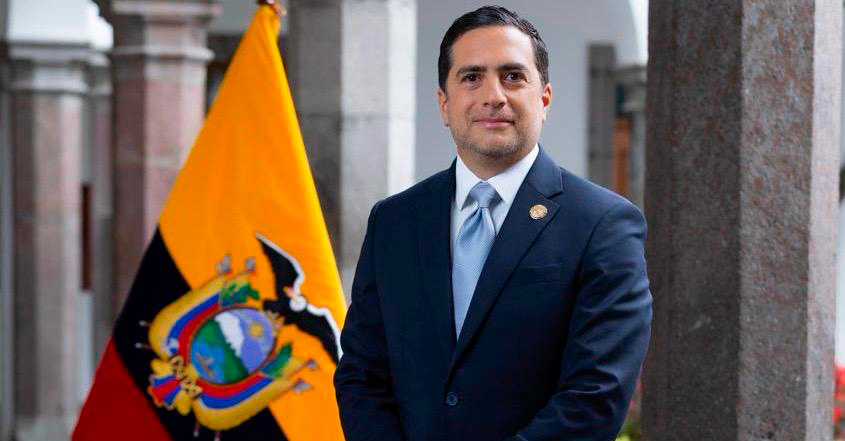
Interview with Brando Benifei, Member of the European Parliament and Chair of the European Parliament’s Delegation for relations with the United States. He plays a central role in shaping transatlantic dialogue at a time of rapid geopolitical and technological transformation. A leading voice on digital policy, industrial strategy, and international cooperation, he has been actively engaged in advancing EU–US alignment on key issues such as artificial intelligence, data governance, and the future of global digital standards. His work reflects a strong commitment to reinforcing the transatlantic partnership as a cornerstone for democratic resilience, innovation, and economic security.
In recent months, we have seen increasing tensions in EU–US relations. From your perspective, how would you characterize the current state of the transatlantic partnership, and what are the key priorities to strengthen it in 2026?
The transatlantic partnership remains essential, but it is operating under sharper political pressure and more frequent use of trade tools as leverage. EU digital enforcement is increasingly framed in Washington as a non-tariff barrier, and recent episodes have tested the limits of mutual respect and European regulatory autonomy. In 2026, priorities should be to restore symmetry and predictability in trade, keep parliamentary channels fully engaged, and work together constructively where we can.
How should Europe balance the need for strategic autonomy with the imperative to avoid escalation with the United States, particularly in technology and critical infrastructure sectors?
Strategic autonomy is about Europe having real choices, not about turning the United States into an adversary. We should reduce one sided dependencies in key technologies and infrastructure, invest in our own capabilities, diversify our supply chains, and be clear that security cannot be outsourced. At the same time, we need structured channels with Washington to manage tensions early and to cooperate on risks from other actors, so that diversification strengthens the alliance instead of weakening it.
Following your work on the AI Act, do you see a realistic path toward regulatory convergence between the EU and the US on AI and digital governance, or are we entering a phase of increasing divergence?
A single digital rulebook is unlikely soon. The EU has a horizontal framework while the US debate remains more fragmented, with recurring pushback against EU digital regulation from Big Tech. Several US states have adopted human‑centric, risk‑based rules on AI transparency and accountability that echo core elements of the AI Act, despite efforts by the federal administration and industry to curb state initiatives.
But there is still space for meaningful convergence at the federal level. Although we are not aligned on everything, there is growing overlap on protecting minors online and curbing harmful deepfakes, illustrated by the Take It Down Act, as well as on cybersecurity issues. Quiet regulator-to-regulator cooperation also continues on digital competition between EU and US regulators. The EU should work towards convergence and interoperability from these workable areas.
Following the Digital Summit LATAM discussions, do you believe the European Union is giving sufficient priority to its relationship with Latin America and the Caribbean? What concrete steps should be taken?
I believe the EU is moving in the right direction, but this partnership still lacks sufficient priority.
Latin America is not just an economic partner, but a key actor in shaping a human-centric and rules-based digital transformation. Brazil is a leading example, with an AI proposal aligned with the EU’s risk-based approach, alongside similar developments in Peru, Chile, Colombia, Mexico and Argentina.
From my direct exchanges with Brazilian institutions and stakeholders, there is a clear convergence toward cooperative digital sovereignty—building domestic capacity while remaining open to shared standards.
The EU should now move from dialogue to action, focusing on:
- stronger institutional partnerships;
- regulatory convergence;
- and joint investment in infrastructure, innovation and skills.
How can the EU position itself as a credible long-term partner for investment in digital infrastructure and connectivity in Latin America and the Caribbean?
Credibility depends on delivering both investment and clear, predictable rules. The EU’s strength lies in combining regulation with funding, but this must translate into concrete projects—scaling up investment in digital infrastructure, AI, cloud, semiconductors and skills, while working with partners such as Development Bank of Latin America and the Caribbean (CAF).
At the same time, the EU is rightly pushing for regulatory simplification through the AI and Data Omnibus to support competitiveness and reduce burdens, especially for SMEs. However, simplification must not weaken key safeguards. On both files, the objective is to improve coherence and provide clarity to industry while preserving the core principles of the European framework.
Do you see scope for a structured EU–US–Latin America trilateral agenda, particularly on digital standards, cybersecurity, and supply chains?
Yes. In a more fragmented global landscape, cooperation among democracies is essential, especially on AI and digital governance.
While parts of the US debate push toward deregulation, this should reinforce dialogue: clear and proportionate rules are not a barrier, but a condition for trust and innovation. Together with Latin America, the EU can help promote this approach by sharing best practices and building a level playing field based on common standards.
A trilateral agenda would be particularly valuable in:
- digital standards and AI governance;
- cybersecurity and resilience;
- and secure supply chains, especially in semiconductors and cloud.
In an increasingly fragmented global landscape, what institutional or political changes are still needed for the EU to act more decisively on the global stage?
The EU has the right foundations to act globally, but it needs greater speed, unity and strategic clarity. Three priorities stand out.
First, stronger internal coherence: as highlighted by Letta and Draghi, fragmentation in the single market remains a key weakness, making its completion essential.
Second, better alignment of regulation, industrial policy and investment, with a significant scale-up of resources—potentially through common financing instruments—to support strategic sectors like AI, cloud and semiconductors.
Third, the EU must speak with one voice externally and move toward a more integrated, federal approach to governance, to act more decisively on the global stage.