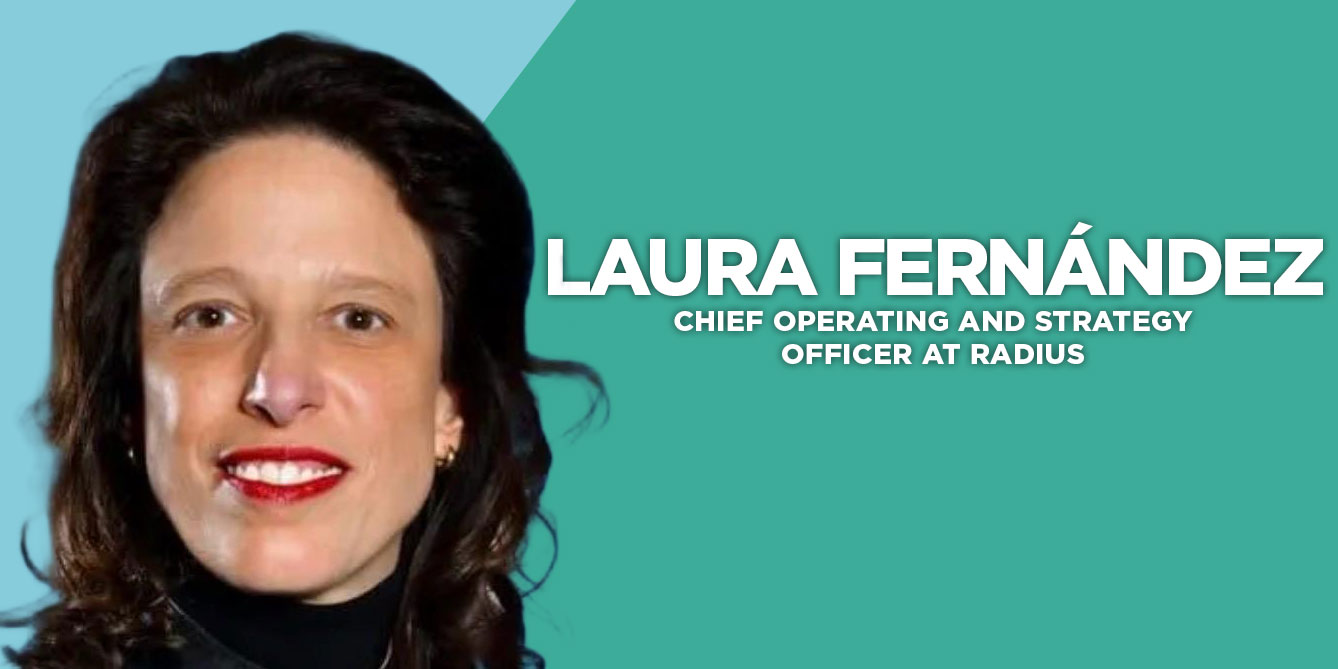
1) For readers who may not yet be familiar with Radius, how would you describe the
company’s role in the global digital infrastructure ecosystem?
Radius Global Infrastructure, Inc. (“Radius”) is a premier global investment company
specializing in telecom and digital infrastructure. Our focus is on the strategic acquisition
and management of critical telecommunication assets, including cell site leases, wireless
solutions, fiber aggregation points, Distributed Antenna Systems (DAS), and data centers.
Radius Global is one of the largest acquirers of net lease communications assets and
properties globally. Our extensive footprint spans 23 countries across North America,
Europe, Latin America, and Australia, operating through our subsidiaries under the APW
name. With 15 years of consecutive growth, we have invested over $3 billion in assets and
generate annual cash flows in excess of $300 million.
Radius Global is a portfolio company of EQT Active Core Infrastructure and the Public Sector
Pension Investment Board. Our mission is to deliver flexible and tailored strategic solutions
to foster the growth and development of the telecommunications industry.
2) Radius began with a focus on ground and rooftop leases. How has your investment
portfolio evolved to include towers, fiber aggregation points, and data centers, and
what has driven that evolution?
Radius Global Infrastructure initially focused on ground and rooftop leases, which continue
to be a fundamental component of our business due to their inherent diversification and
resilience. In recent years, we have strengthened our position in this asset class through
strategic partnerships with tower companies and Mobile Network Operators (MNOs).
These alliances have unlocked new opportunities for collaboration on strategic digital assets
for operators, such as switches, fiber aggregation points, and data centers. By leveraging
these partnerships, we have positioned ourselves as one of the most prominent investors in
digital assets, capitalizing on our unique and specialized approach. As of today, our portfolio
comprises more than 13,000 assets worldwide.
3) You often refer to “mission-critical” digital infrastructure. What defines these assets,
and why is long-term ownership central to your investment philosophy?
At Radius Global Infrastructure, “mission-critical” digital infrastructure encompasses assets
vital to our customers’ operations and strategic objectives. Our investment philosophy
emphasizes long-term ownership, aligning with the enduring nature of these assets to
ensure stability and reliability for our clients.
We embrace a customer-centric approach by concentrating on what is mission-critical for
our clients, enabling us to deliver tailored strategic solutions that enhance their operational
capabilities. By prioritizing our customers’ success, we strengthen our position as a trusted
partner in the telecommunications industry, committed to supporting their strategic goals
and industrial ambitions.
4) How does Radius’ investor profile shape the way you partner with Telecom Operators,
Towercos and PE-backed network operators?
Radius Global Infrastructure’s investor profile and long holding periods significantly mirror
our customers’ long-term strategic financial and industrial needs. Our approach prioritizes
investments that offer stable returns and contribute to the long-term sustainability of the
telecommunications industry.
5) What is the fundamental difference between Radius and a traditional commercial
real estate investor when it comes to digital infrastructure assets?
The fundamental difference between Radius Global Infrastructure and traditional
commercial real estate investors is our focus on the permanence of the operator rather than
asset disposal or redevelopment for commercial use. Unlike others who seek returns
through sales or redevelopment, Radius is committed to long-term ownership of digital
infrastructure, valuing the network criticality to operators.
This approach enables us to invest also in assets with lower commercial real estate appeal
but critical in operational value. For example, you can find some of our assets in very remote
areas across all our geographies. These assets, while overlooked by traditional investors, are
invaluable for the telecommunication companies, allowing us to state that we “unlock
embedded and unexpected value” for our partners.
6) How does your collaborative model—through sale-leasebacks and similar
structures—help operators unlock capital while retaining control of critical
infrastructure?
Radius Global Infrastructure’s business model, utilizing sale-leasebacks and similar
structures, offers telecom operators the opportunity to unlock capital while retaining control
over critical infrastructure. By focusing on the passive component of the infrastructure, we
enable operators to manage operations and technological upgrades independently. This
approach is a core aspect of our business proposition and is highly valued by operators, who
maintain full autonomy over active components with no impact on their industrial strategy.
7) Latin America is increasingly central to global digital and geopolitical dynamics. How
does Radius view the region from a macro and strategic perspective?
Radius views Latin America as a region of significant strategic importance, both from a
macroeconomic and geopolitical perspective. The region’s potential for growth in digital
infrastructure is immense, with 5G technology still in its early stages and fiber penetration
lagging other regions. This presents a unique opportunity for investment and development.
Moreover, the digital divide in the region underscores the need for enhanced connectivity,
which Radius sees as a vital component of strategic engagement. From a geopolitical
standpoint, Latin America’s commercial ties with the United States and Europe, coupled
with cultural proximity, further enhance its strategic relevance for a closer partnership also
pursued by other regions across the globe. These factors position the region as a key player
in global digital dynamics, offering Radius a promising landscape for strategic initiatives and
partnerships.
8) In which Latin American markets does Radius currently operate, and what factors
guide your market selection in the region? Radius currently operates in key Latin American
markets, including Brazil, Chile, Colombia, Mexico, and Peru. Our market selection in the
region is guided by a strategic focus on collaboration and partnership, particularly with
Mobile Network Operators (MNOs) and Tower Companies. This collaborative and trustbased model is central to our approach, allowing us to build strong, mutually beneficial
relationships.
More than 50% of our acquisitions in Latin America arise from partnership agreements,
highlighting the importance of these alliances. In a highly competitive environment, coupled
with the unique socioeconomic characteristics of the region, we believe that collaboration
with all industry stakeholders is essential for achieving stability and efficiency. This
approach not only strengthens our presence in these markets but also positions us to
explore opportunities across the entire region.
9) What are the main digital infrastructure asset classes you currently own in LATAM,
and where do you see the most significant growth opportunities going forward?
Historically, ground lease acquisitions have been the primary focus of our digital
infrastructure investments in Latin America. However, in recent years, we have expanded our
attention to include key strategic assets such as switches, interconnection points, and fiber
aggregation nodes. These assets are crucial for enhancing connectivity and supporting the
growing demand for digital services in the region.
Significant investments in data centers are beginning to flow into Latin America, presenting
new opportunities for growth. We are selectively exploring these opportunities, prioritizing
the ones that can be integrated with the business models of major telecommunications
companies. This strategic approach allows us to align with industry trends and leverage the
increasing demand for data processing and storage capabilities closer to end-users.
10) From a policy and regulatory standpoint, why is long-term, passive ownership of
digital infrastructure becoming increasingly important for connectivity, resilience, and
economic development?
Across our footprint, we see multiple government policies and initiatives oriented towards
the expansion of resilient connectivity with very ambitious targets to maximize its reach to
unlock the full potential of digital and emerging technologies. With the bulk of the
investments needed coming from the private sector and the associated financial strain on
telecoms operators and infrastructure providers, our collaborative investment model,
focused on long-term, passive ownership of digital infrastructure, acts as a catalyst for
resources to deliver on those targets for network deployment.
Regulation plays a central role in the industry, and we are committed to collaborating at an
institutional level to shape a regulatory framework that enhances predictability and fosters
investment and innovation, addressing the connectivity needs of communities, thereby
driving economic progress.
Final personal considerations:
“As a personal reflection, I am truly excited to have joined Radius Global Infrastructure at this
pivotal moment of transition to its next phase of growth. With a lifelong background in the
telecommunications industry, particularly with an operator that significantly contributed to
the development of communications in Latin America, I am eager to bring a unique
perspective to Radius. This experience gives me a deep understanding of the region’s
untapped potential, which aligns with Radius’s strategic goals. I am confident that my
expertise will be valuable as we look to the future and explore new possibilities together.”