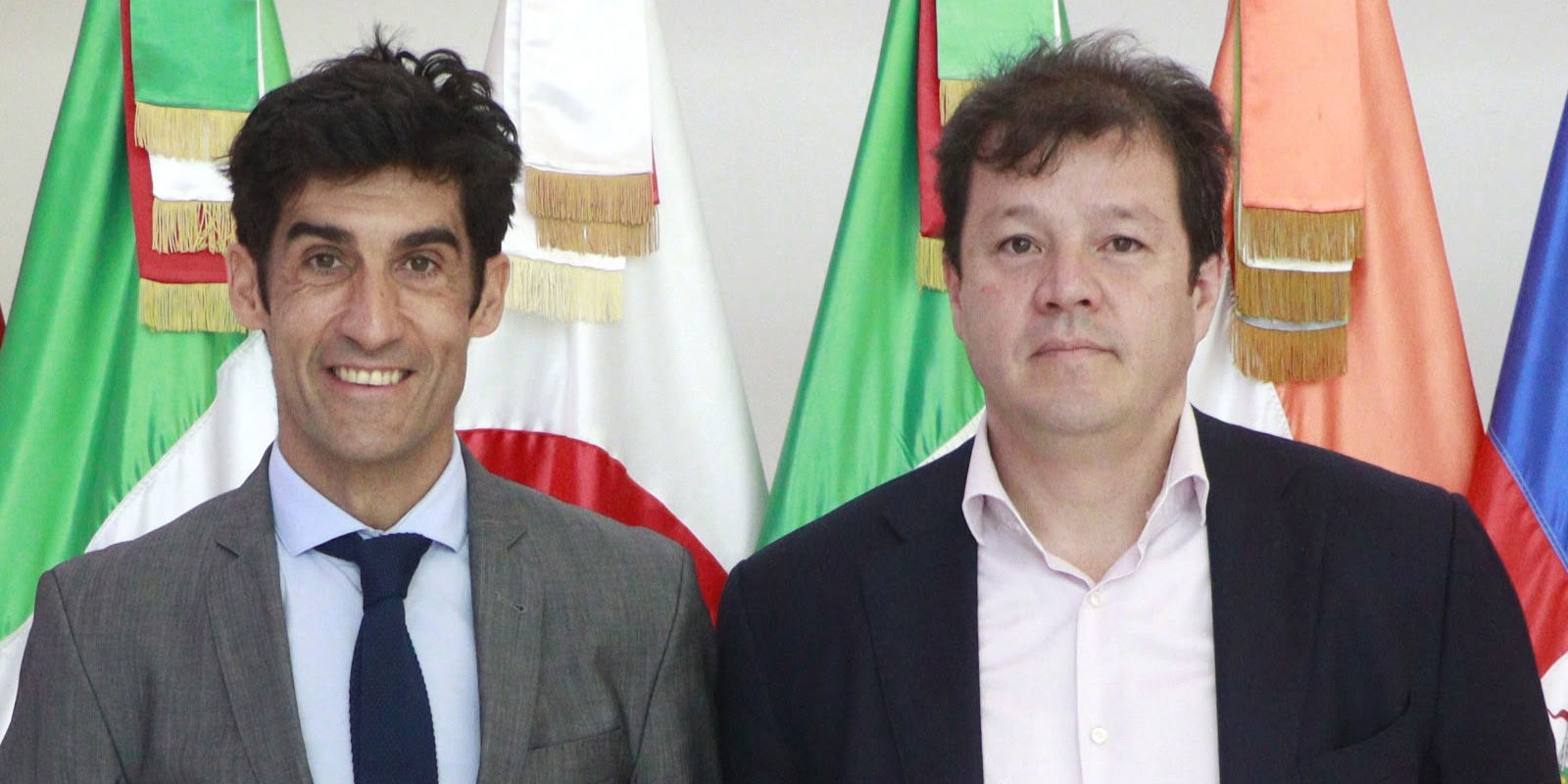
Interview with Juan Pablo Spinetto, Bloomberg Opinion columnist covering Latin American business, economic affairs and politics, previously Bloomberg News’ managing editor for economics and government in the region.
By Piero Bonadeo
About 44% of global crude supply growth between 2025 and 2030 is expected to come from Brazil, Guyana, Argentina and Venezuela. Yet these same countries have signed ambitious climate pledges. Is Latin America managing a realistic energy transition, or is this a contradiction it hasn’t fully reckoned with?
Indeed, Latin America is undergoing a very uneven energy transition: it’s a region that already boasts a significant shareof renewables and great potential in solar, wind, hydropowerand biofuels, yet still depends heavily on imported natural gas and oil while making only mediocre progress toward clean-energy goals. This is less a contradiction than a sign that the region’s green potential remains largely untapped, awaiting the investments, policies and long-term strategies needed to unlock it.
Conflict in the Middle East is creating a rare opening for Latin America to position itself as a reliable energy supplier. How durable is that opportunity — and could the region squander it, as it has done with commodity booms before?
It’s a structural opportunity: today’s geopolitics favor Latin America because of its geographical position, abundant natural resources, history of inter-state peace and capacity to benefit from the nearshoring of critical supply chains. Yes, things can go wrong again, but it’s far better to be in this position than any other.
Mexico has shifted from investor-friendly reforms toward a more nationalist approach, even as President Sheinbaum signals renewed openness to private capital. Can Mexico credibly re-engage investors — and what’s at stake if it can’t?
For energy investors, it will take time. There are opportunities in the electricity and natural gas sectors, but the oil industry remains dominated by Pemex and by the government’s strong nationalistic approach. Ironically, Mexico’s failure to build a modern energy industry in which private and state-owned companies coexist and compete has only deepened the country’s dependence on imports of Texan natural gas.
You’ve called Vaca Muerta a “once-in-a-generation opportunity,” but also noted the boom should have happened much sooner, held back by capital controls, price caps and restricted exports. What needs to stick from Milei’s reforms for Argentina to actually deliver on its LNG ambitions?
Argentina still needs to strengthen its macroeconomic framework and prove that stability does not hinge on a single government. Credibility is built day by day, month by month, year by year. Yes, Vaca Muerta should have been developed earlier, but there is now a growing political consensus nowaround the value of exploiting these reserves, creating jobs and generating the much-needed surplus in the country’s energy balance.
Latin America is attracting major data center investment, partly on the promise of abundant renewable energy. But the region already has fragile grids. Is the digital infrastructure rush creating energy security problem policymakers aren’t taking seriously?
I don’t see an immediate energy security problem but policymakers across the region — as elsewhere in the world –will face difficult decisions when it comes to attracting data center investments, including over national security concerns. With its abundant renewable energy resources, Latin America once again has a strong opportunity, but social buy-in will be essential. It would be deeply ironic for one of the world’s most biodiverse regions, with such a long history of political conflict tied to the exploitation of natural resources, to repeat those same mistakes with the technological revolution of our time.
You’ve flagged that political swings in Colombia and Brazil’s upcoming electoral cycles could reshape energy policy. How should international energy companies be thinking about political risk in Latin America right now?
While the region has shifted decisively to the right, potentially paving the way for more business-friendly policies, companies should not forget that political volatility is deeply embedded in Latin America’s history. Things can change abruptly, so getting too comfortable would be a mistake. The good news, perhaps, is that this is no longer a uniquely Latin American feature.
You’ve covered Latin American commodities for over 15 years — through the Petrobras scandal, the commodity supercycle and now the shale renaissance. What’s genuinely different about this cycle? Are the institutions strong enough to translate energy wealth into lasting development?
It may not be immediately apparent but Latin America is now in a far stronger macroeconomic position, with lower inflation, more prudent monetary policies and stronger exchange-rate regimes. It is telling that most Latin American currencies have appreciated against the US dollar this year despite the uncertainty dominating the global economy. That, in turn, is improving access to international capital markets and helping fund investment opportunities with lower macroeconomic risk. Looking ahead, the real challenge for resource-rich countries will be to build savings institutions capable of managing that wealth in a way that benefits future generations.
You’ve written that Latin America’s oil and gas expansion is “another opportunity the region can ill afford to miss.” How do you square that with the climate commitments these governments have signed? Is there a credible version of this story where hydrocarbon revenues fund a real energy transition?
Brazil is a good example that this apparent contradiction can be reconciled: Nearly 90% of its electricity already comes from renewable sources, mainly hydropower, but increasingly wind and solar as well. At the same time, the country is the largest oil producer in the region and aims to rank among the world’s top five within a few years. One area where Latin America, the world’s most urbanized region, can do far more is transportation. Significantly increasing EV penetration would not only help meet climate commitments but also reduce the region’s exposure to swings in refined fuel prices.
You are from Buenos Aires, lived in Rio de Janeiro and now in Mexico City. Should you pick up one restaurant in each city, what would those be?
In Buenos Aires, I’d go for a classic bodegón like AlbamonteRistorante, with its traditional dishes blending European-influenced recipes and local specialties. In Mexico City, home to one of the most exciting food scenes in the world, I’d choose Mi Compa Chava, where the seafood is so fresh and tasteful your mouth feels transported straight to the Pacific coast. And in Rio de Janeiro, nothing beats an açaí batido com granola from Polis Sucos in Ipanema, a place where you can soak in the local beach scene without regrets.
More ideas here: https://www.bloomberg.com/opinion/articles/2024-12-05/latin-america-s-real-superpowers-are-chimi-ceviche-and-guac
Setting energy aside for a moment — after years covering Latin America’s politics, crises and occasional breakthroughs, what’s your broader read on the region right now? Is this a moment of real opportunity, or does the structural dysfunction that has held it back still run too deep?
I am an optimist; I have no doubt this is Latin America’s moment, with enormous opportunities and a far stronger position than in the past. But there is still a large and unavoidable asterisk: the region must improve its institutional stability and rule of law, education and security. If countries can deliver on those three fronts, there is no reason Latin America cannot finally achieve the future it has dreamed of for so long.